
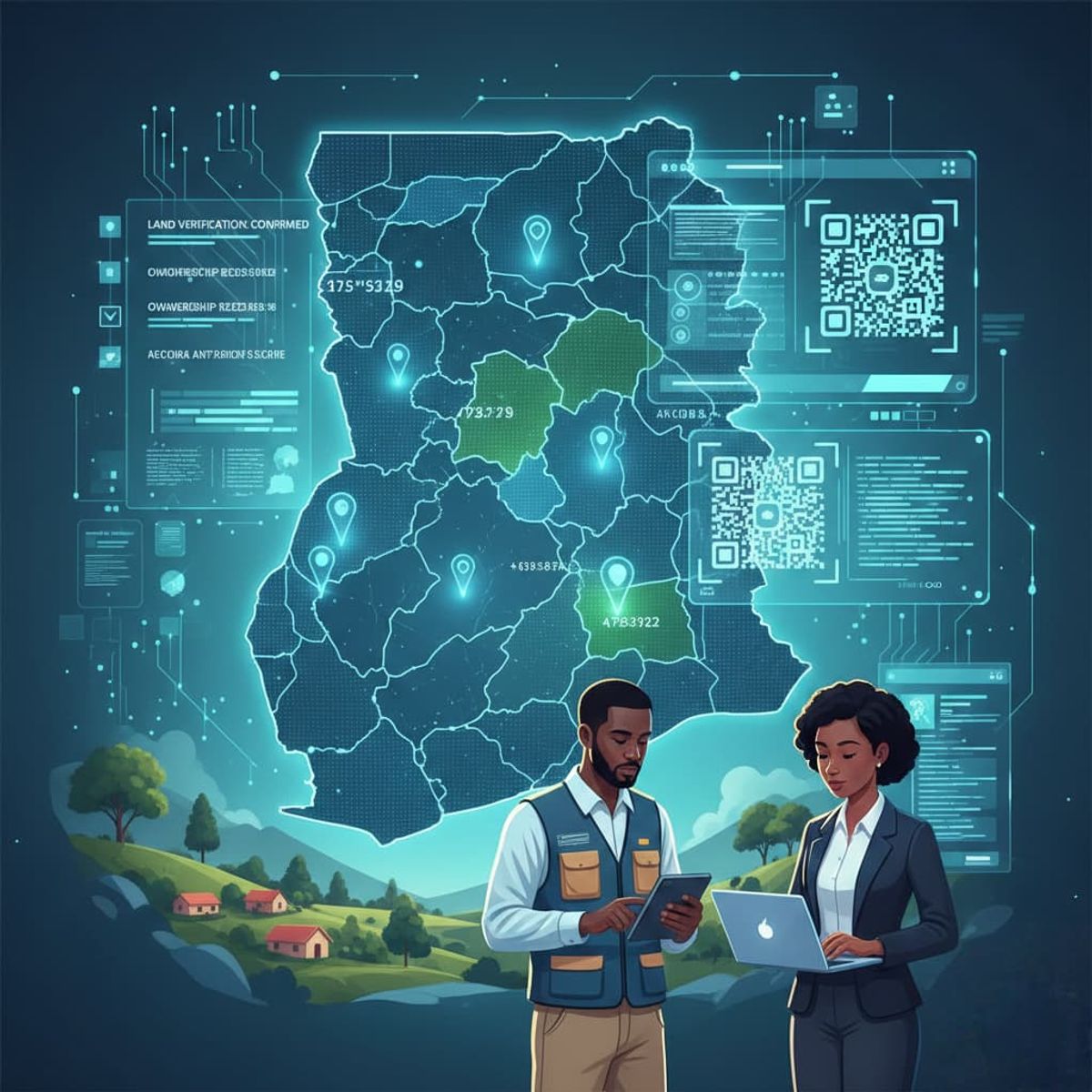
Why Structured Coding and AI-Powered Databases Can Solve Ghana’s Land Issues
Ghana officially rolled out the Land Title Registry in 1986 with the goal of creating a parcel-based land system that ensures secure ownership, reduces land fraud, and simplifies land transactions.
Nearly 40 years later, the system is still not fully operational nationwide.
Only about three or four regions actively use the title registry, while emerging regions like Volta, Bono, and Ahafo still depend on the Deeds Registry. This fragmented system continues to create challenges such as land disputes, double sales, and prolonged litigation.
I’m not here to assign blame. I simply want to share how technology, structured coding, and AI-powered databases can help fix Ghana’s land administration system today.
The Role of Technology in Solving Ghana’s Land Problems
Technology has transformed industries like banking, healthcare, and transportation. There is no reason why land administration in Ghana should be left behind.
With tools such as:
OpenAI APIs
Google Maps APIs
Cloud databases
AI-powered verification systems
We can build smarter land systems that:
Reduce land fraud
Prevent multiple sales
Improve data accuracy
Speed up land registration
Ghana’s recent introduction of QR and barcode site plans is a good step forward. However, more advanced digital solutions are still needed.
Instant Land Verification Is Already Possible
With Google Maps and the GhanaPost GPS system, land verification can already happen digitally.
In today’s world, it is technically possible to:
Confirm if a land parcel exists
Verify its exact coordinates
Check boundary accuracy
Validate site plans online
All from anywhere, as long as there is internet access.
When combined with a centralized national land database, this system can eliminate many land disputes before they even begin.
Why Ghana’s Online Land Registration Needs Improvement
The Lands Commission online registration system has struggled with:
Slow processing times
Manual verification
Fragmented records
Poor system reliability
These issues create opportunities for:
Human error
File manipulation
Lost documentation
Unnecessary delays
For ordinary Ghanaians, this means stress, legal battles, and financial loss.
How AI-Powered Land Databases Can Transform Ghana
A centralized, AI-powered land database can bring major improvements:
1. Automated Verification
AI can instantly verify:
Land coordinates
Ownership history
Conflicting claims
Duplicate applications
2. Faster Land Registration
Instead of waiting months or years, approvals can be completed within weeks.
3. Fraud Detection
AI systems can detect forged documents, unusual transaction patterns, and repeated land claims.
4. Nationwide Access
Whether you’re in Accra, Ho, Sunyani, or Techiman, the same digital land system would apply.
5. Transparent Records
Every transaction is digitally stored, searchable, and traceable.
Structured Coding Builds Trust in Land Administration
Behind every powerful digital system is structured coding.
When land data is properly structured:
Records become searchable
Disputes are easier to resolve
Errors are reduced
Map integrations work seamlessly
Coding doesn’t just build apps. It builds systems, processes, and trust.
The Future of Ghana’s Land System Is Digital
Ghana already has strong digital foundations:
National ID system
GhanaPost GPS
Digital payment platforms
Growing tech talent
What we need now is integration.
By combining:
Land records
Mapping tools
AI verification
Centralized databases
Ghana can build a modern land system that:
Protects citizens
Reduces court cases
Attracts investors
Supports national development
Final Thoughts
Ghana’s land challenges are not unsolvable.
With the right mix of technology, structured coding, and AI-driven systems, we can create a land registry that is:
Efficient
Transparent
Secure
Nationwide
This is not about politics. It’s about progress.
And as someone who believes in the power of technology, I’m confident this is the direction Ghana should be heading.
Interested in property or tech solutions?